Reflexive Actuation
This project involved building off of existing work in bio-inpsired robotics. It has long been studied that animals have distributed sensing systems for perceiving their environment. For example, take the sensory hairs on a spider, each individual hair provides a relatively small amount of information, but when the signals are pooled, rich useful information can be extracted about the environment can be extracted for feedback to inform actuation.
Similar to nature, we should be able to apply similar principles to engineered systems to create more robust and adaptable systems. This project focused on leveraging distributed accelerometers on an air-frame to measure disturbances in the system manifesting as angular moments. By estimating the angular acceleration of the system instantaneously and feeding this back into the control loop, we can reject disturbances before they propagate through the system.
While there has been prior work implementing this concept on quadcopters, my contributions focused on the application to high speed systems and building a hardware-in-the-loop test bed to demonstrate the efficacy of the control strategy. This work resulted in a publication to AIAA.
How It Works
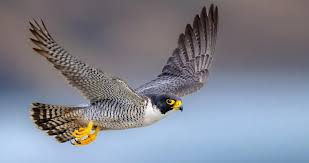
Biological Distributed Sensing System
Many biological animals leverage distributed sensing throughout their wings to inform their locomotion actuation. Rather than having a few high fidelity sensors, they rely on having many sensors distirbuted along their entire body and deriving useful feedback signals from pooling sensor measurments. Take birds for example, they often fly in gusty environments, so they have force sensors distributed along their wings and bodies to measure these disturbances as they happen and negate them through control feedback. Additionally, this lets the birds reject these disturbances as they happen near instantaneously, without letting the disturbance propagate through all of the system states
This project focuses on applying this concept to airborne engineered systems using distributed accelerometers to effectively sense disturbance angular accelerations (which are proportional to the disturbance moments) and reject them in real time before they propagate through all states.

Hardware-in-the-Loop Test Bed/Results
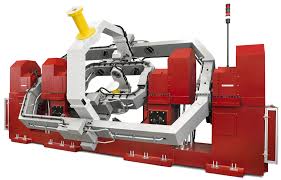
My specific contribution to this project is the development of a hardware-in-the-loop test bed for distributed sensing systems including this reflective actuation concept. The test bed required many components including a reflective memory system to share data and commands between the real-time computer and the hardware-in-the-loop test bed, real-time analysis to be used for feedback, and a data pipeline to collect, process, and return feedback commands to the real-time computer. Largely, this proved to be a successful demonstration of the concept with future live flight testing currently planned for the maturation of this technology.
In addition to designing and constructing the test bed, I also ran sensor analysis to determine noise characteristics of ther accelerometers and calibrate them to ensure optimal results.
Key Achievements
- Designed and constructed a hardware-in-the-loop test bed for distributed sensing and reflexive actuation
- Analyzed high speed flight test data to validate angular acceleration estimates under dynamic conditions
- Contributed to a publication of the work to AIAA
Challenges
- Designing hardware interfaces that maintain strict timing for hardware-in-the-loop testing
- Creating a data pipeline to collect and analyze high speed flight data
- Augmenting existing control algorithms to include disturbance rejection
Solutions
- Leveraged a reflective memory system to share data and commands between real-time computer and hardware-in-the-loop test bed
- Implemented a data flow system to collect, process, and return feedback commands to the real-time computer
- Began integration of cascaded control into 6-DOF simulation autopilot system to reject disturbances
Results
- Successfully demonstrated reflexive actuation in a hardware-in-the-loop test bed
- Built up the test bed to be able to accomodate system which might be able to leverage distributed sensing
- Contributed to a publication of the work to AIAA